Many people have realised that there is more to Greece than just Santorini and Mykonos. Naxos has become a perennial favourite in the past few years and is a great combination with Santorini, with easy connections. This Santorini, Naxos and Athens itinerary covers everything you need to make this trip a reality, including time frames, transport, activities, dining suggestions, and lots more!
You may even want to book a private session with me – I’ve helped almost 400 others this way!
And come join our private Facebook Group where you can ask questions and get advice from real travellers!
Note: This article may contain affiliate links.
When to visit Greece
The best times to visit Greece are April-June and September-October. The weather is mild and most places have few crowds. High season is late June to early September, and prices will reflect that as will the crowds, the number of cruise ships and accommodation availability.
Summer is still great, especially for beach time and in some of the lesser-known spots. The water is warm, there are blue skies every day and a fun holiday atmosphere.
Important travel essentials for Greece
Basic Facts about Greece
Greece is actually known as Hellas, with its official name being theHellenic Republic “Helliniki Dimokratia”. It covers 132,000 sq kilometres of land, including 227 inhabited islands. The population is just over 10 million people.
The religion is Eastern Orthodox ( Christian) , they drive on the right-hand side of the road, and the calling code is +30.
What to see and do in Greece
Greece has manyincredible destinationsand is considered home to some of the most beautiful and interesting sites in the world. There are 19 UNESCOWorld Heritage Siteswith another 16 under consideration.
There are also some incredible things to see on the mainland includingAthens– ancient sites like Delphi and Olympia as well as places of considerable natural beauty and wonder such asMeteoraandMt Athos. The northern city of Thessaloniki is also wonderful.
ThePeloponnese peninsulais becoming more popular and is considered to be the ‘real Greece’.
How to get around the Greek Islands
The train and bus network is not as modern or efficient as those in, say, France or Italy, but the Ferry network is probably the most extensive and effective in the world.
In Athens taxi drivers, like many cities, can be a bit hit and miss so it pays to have the details of a trusted one. For private transfers, we use and recommendCATTaxiand if you use the Promo code “GTS” when you book throughthis linkyou will receive a further10% off. If you do catch a taxi make sure the meter is on!
For port and ferry transfers you can book via this article too.
For Ferries, we useFerryhopper and we invariablyhire a carat each destination even if it’s just for a day or two.
Greek Culture
The Culture in Greece is rich and varied and is over 6000 years old.
There are a number of things that make it so unique, including the world-famous Greek Hospitality, but there’s also the unique architecture,food, dancing, music and more. The Greek Language is one of the oldest in the world, and it always pays to know a few key phrases for your trip.
This article focuses on an itinerary that ticks the most boxes for the most people, with these three destinations, and can usually be done between Easter and November.
Why this sequence?
We always recommend doing Athens at the end, if possible. This ensures you are back on the mainland well before your international flight home and allows for ferry or flight delays or cancellations. Athens is also best for shopping, so do it at the end and don’t lug everything around the islands.
We recommend Santorini first as it is the furtherest and, as it has a modern international airport, there are more airlines servicing it and the planes are larger and less prone to delays.
Our recommended minimum duration would be:
Santorini – 3 days
Naxos – 3 ( 4 or 5 is better)
Athens – 3 nights (although you could spend a month or more)
Variations
Looking for famous beach clubs and parties? Swap out Naxos for Mykonos.
Looking for off-beat islands with no airports? Swap Santorini and Naxos for Sifnos and Folegandros.
Not interested in the beach but love culture? Go to Syros or Hydra.
Visiting in the off-season? (November to April): stick to the Mainland.
There are limited ferry connections between the western Cyclades, a topic undergoing constant discussion in Greece. The route between Milos and Santorini is typically serviced by Seajets and takes about two hours.
Santorini is a bucket-list destination for most people, and for good reason.
Despite the cruise ships and the crowds, it remains one of those places that not only meets your expectations but probably exceeds them. The views truly are the stuff of legends, and it is little wonder it is so popular withhoneymooners.
It can get a bit crazy when the cruise ships come in each day, so a room with a pool and terrace makes for a great escape for an afternoon siesta and sundowners. When you re-emerge for dinner, most of the tourists will have floated away!
There are a surprising number ofthings to do on Santoriniwith beaches, wineries, hot springs, great shopping, and some of the world’s most iconic and photographed sunsets. There are even a lot of great things for kids, too!
How to get to Santorini
You catch the ferry from Milos to Santorini. Book ferry ticketsHERE.
TIP: Both the port and the airport can be quite nuts in summer, and there can be long waits for the cable car, taxis, and donkeys.Book your transfers and tourswithSanto Luxury Escapewith the promo code ‘GTS” for a 10% discount.
Where to stay in Santorini :
For couples:Ducato Di Oia( adults only) suites in Oia orAbove Blue Suitesin Imerovigli for more isolation and at a lower price point.
Breakfast: Breakfast should be included at your hotel. Otherwise, Our Corner in Fira and La Scala on Oia are great choices.
Lunch: enjoy lunch either at one of the wineries or at Aeolos Taverna in Akrotiri. If heading to Black Beach, enjoy lunch at Akro Beach Bar. Lefkes Taverna in Oia is also hard to beat for food or service and Metaxi Mas is one of the best tavernas in the entire country!
Dinner: Book a sunset dinner cruise on the Caldera or Santorini Mou in Oia, or Dimitris Ammoudi Taverna in Ammoudi Bay. Blu in Imerovigli is also wonderful for both lunch and dinner ( and they have a pool).
There are many connections between Santorini and Naxos, particularly in summer. The faster catamarans take around 90 minutes and the slower Blue Star ferry takes two hours. We always recommend the later which are bigger and more stable in bad weather. They are also less likely to cancel for this reason.
Naxos is the largest and greenest island in the Cyclades group. It is known for its excellent beaches, charming mountain villages and thriving agricultural industry which makes it a very different island to both Milos and Santorini.
Naxos has one main town, Chora, and many people see this as an advantage for the island as the port, airport, main town and good beaches are all close together. While it’s a great idea to hire a car to explore some of the more remote parts of the island it does mean that you can have a perfectly nice vacation without one too.
Being so big and with so much to do we recommend trying to stay on Naxos for as long as possible. A week is not unheard of and many people stay for months at a time.
Alyko Beach
Where to stay on Naxos
For first-timers we recommend staying in Chora, the main town of the island. This is also where the ferry port is and the airport is only a 10 minutes drive.
Chora is a charming and quite lively town with a Venetian Castle, the ‘Old Market’, and the famous Portara Gate on the headland. There are even a couple of nice beaches so it is possible to spend your entire time here, even without a car.
For a good mid-range hotel check outHotel GrottaorNastasia Village,who have newly renovated rooms in a quiet spot a few streets back from the beach and the main part of town.
Families and groups should check out Ikaros Studios and Apartments which has a great pool but is only a short walk to this popular family beach.
Astir of Naxosis one of the most popular luxury hotels on the island and has a beautiful swimming pool and spa as well as a children’s playground. We also loveNissaki Beach Hotelwhich is right behind Agios Georgios Beach and has a beachfront restaurant and swimming pool, or Hotel Glaros Boutique Hotel which is right next door and less expensive.
Things to do in Naxos
Cooking Classes
1.This classis conducted in a local home and includes dinner there too;
2.This classis held at Basiliko Taverna Farm and is conducted by their excellent Chef and owners. It includes picking your own vegetables, meeting the farm animals, and dancing and plate smashing! Mention us for €5 discount person.
Naxos is famous for its food and, in particular, its honey, cheese, and potatoes. In fact, the Naxos Potato Festival is held each year in July and they are currently world record holders! In the Chora, you will find numerous shops that showcase the local produce and, of course, you can sample all the delicacies of Tavernas across the island. Don’t miss the amazing Naxos Cheese Koufopoulos, where you can do a private cheese tasting with wine, in their cellar and Antamoma Cuisine Deli.
Explore the mountain villages. Either pick up a car or catch the buses up into the mountains. There are almost a dozen villages you can see but with just one day stick with Filoti, Aperianthos, and Chalki, with a side trip to the Monastery at Moni if you have time.
Hike to Mt Zas and the Cave of Zeus. Do this very early before the sun heats up.
Explore the beaches. Hopefully, you will also have time to explore some beaches, especially if it is summer. There are many to choose from and if you have a car you can easily visit several before or after the mountain villages.
Drive down to the Cedar Forest of Alyko, not much of a forest these days but rather a large, sandy nature reserve with several beaches. Then drive north to Paralia Glifada, Kastraki, Orkos, Plaka, and Agia Anna before ending at Agios Prokopios, our personal favourite.
Do a day trip to another island. Paros is right next door and can be as quick as 30 minutes on the ferry. Mykonos to the north is only 40 minutes away. You can explore the the ‘small Cyclades’ islands by public ferry (Ano Koufonisa then has little sea buses that go around the beaches) or on sailing trips
Where to eat on Naxos
In the mountain villages stop in Filoti for a coffee at Platano on the square, under the shady plane trees. In Apeiranthos there are some great choices for lunch including Taverna Platanos and ‘Ο Αμοργινός‘ ( O Amorginos) is excellent too.
Many visitors also love Rotonda. This is a large restaurant and bar high in the hills before Apeiranthos with sweeping views over the valley and out to sea.
In Chora head to Avaton 1739 for sunset drinks and you can stay for dinner, or perhaps head into one of the small, charming places in the Old Market like Lithos or Labyrinth.
Down near St.George Beach To Elliniko is worth queuing for a table as is Maro’s.
For some great live music, plate smashing, and dancing the Flamingo Bar is the place to be.
This is really a personal choice. The costs will likely be similar but the ferry will take longer, which a lot of people enjoy. Again, book the Bluestar and perhaps upgrade to Business Class and enjoy a meal or a bottle of wine with great views. You can even book a cabin and have a nap and a shower!
Athens of course is the Capital of Greece and is one of the oldest cities in the world, having been occupied for around 5000 years.
Named after the fierce warrior Goddess Athina ( which is what it is called in Greek) the city has a fascinating and colourful past.
There is a lot to do and see in Athens and the ancient centre is easy to get around and very walkable. Apart from the many things you can do in Athens including great shopping, incredible food, and all the ancient sites, there is also great nightlife with a plethora of bars, tavernas, and clubs to choose from.
There are a lot of new hotels and restaurants many with incredible rooftop views, especially of the Acropolis. It’s surprisingly affordable compared to most European capitals and returns tremendous value for your dollar.
For couples: Zillers Hotel has only 10 rooms and amazing Acropolis views from some rooms and the lovely rooftop bar and restaurant and is right on Mitropolous dining street, or The Foundry Suites in Psiri are uber cool and was once an industrial foundry.
For families and groups:
Great hotels that have one and two bedrooms suites and apartments include Met34, Athens Ikon and The Gem Society. All are in excellent central locations and all include breakfast too!
Dionysus is a beautiful apartment right in the middle of Plaka. It has 3 bedrooms and can sleep 9 and it’s a great price too given the quality (one thing to note however is that it is not airconditioned).
Auntie’s Home in Plaka is a fantastic 2 bedroom/2 bathroom apartment with a huge terrace and amazing Acropolis views too. I can’t believe it’s so cheap, actually!
Solo: I love to stay at Ergon House when I’m on my own. It’s across from Zillers and part of the famous Ergon House food emporiums.
Where to eat in Athens
Breakfast : this will likely be included in your hotel tarrif. Otherwise the Brunch Factory does incredible meals for breakfast and lunch.
It’s important to make sure you are covered for medical expenses ( some countries may include this in health insurance) but also for lost baggage, flight and ferry delays and cancellations, theft, and emergencies, including something that happens back home while you are away.
This can save you tens of thousands of dollars, or even more.
Direct hotel bookings for 2026 are surging across Greek destinations, with new Nelios data showing sharp early demand driven by price-sensitive travelers....
Agios Nikolaos is one of the most picturesque towns in Crete, known for its beautiful lake, seaside promenade, and relaxed atmosphere. Located in the island’s east, it combines coastal charm with easy access to some of Crete’s most scenic drives and historic sites. Whether you’re visiting for a few days or basing yourself here for longer, there are plenty of things to do in and around Agios Nikolaos.
May, June, September, and October are ideal times to visit for good weather, manageable crowds, and reasonable prices. If you prefer the lively summer vibe, July and August are great, but like most places, expect hotter weather, more tourists and higher prices.
Spring (April – June)
Highlights: Mild weather, fewer tourists, spring flowers.
Average Temperatures:
April: 16°C (61°F)
May: 19°C (66°F)
June: 23°C (73°F)
Summer (July – August)
Highlights: Peak tourist season, ideal for beach activities, lively atmosphere.
Average Temperatures:
July: 27°C (81°F)
August: 27°C (81°F)
Daytime highs can reach 30°C (86°F) or more.
Autumn (September – October)
Highlights: Warm sea temperatures, quieter beaches, pleasant weather.
Average Temperatures:
September: 25°C (77°F)
October: 20°C (68°F)
Winter (November – March)
Highlights: Quiet and peaceful, good for cultural exploration but limited beach activities,
Average Temperatures:
November: 17°C (63°F)
December-February: 14°C (57°F)
March: 15°C (59°F)
Where is Agios Nikolaos, and how do you get there?
Agios Nikolaos sits on the western shore of Mirabello Bay in eastern Crete, about an hour’s drive from Heraklion.
How to get to Agios Nikolaos:
From Athens, you can travel to Rethymnon by plane or ferry.
Agios Nikolaos is around 62 kilometres east of Heraklion, the capital of Crete. The drive takes about an hour via the main northern coastal highway.
There’s no airport in Agios Nikolaos, so most visitors fly into Heraklion International Airport (HER) and either hire a car or take a bus from the main KTEL terminal next to the airport.
Buses run several times a day between Heraklion and Agios Nikolaos, continuing east toward Ierapetra and Sitia. If you’re coming from Chania, it’s roughly a three-hour drive across the island.
What makes it special?
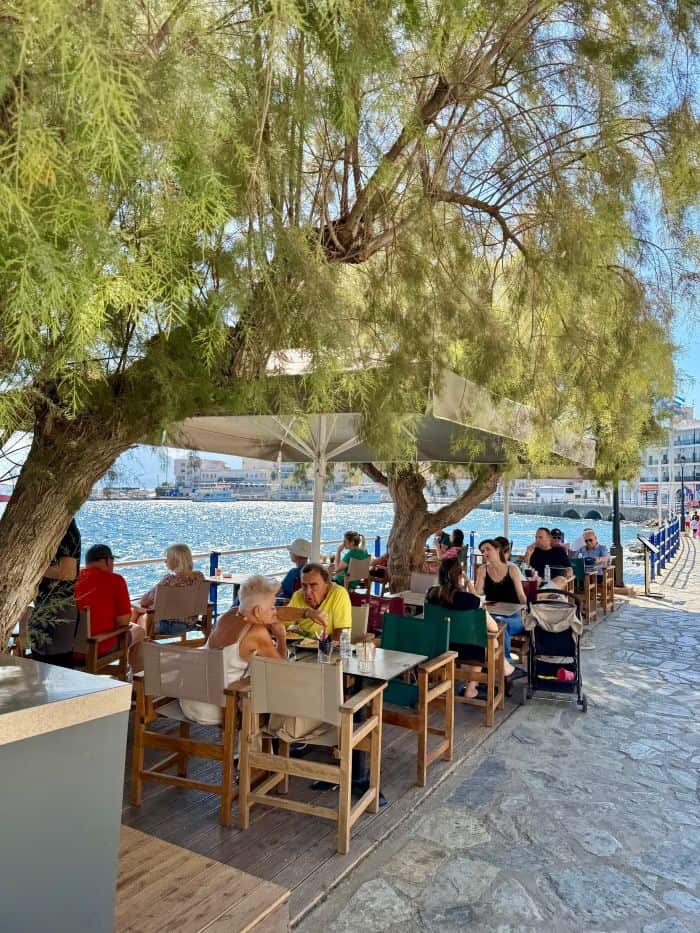
The town’s centre wraps around Lake Voulismeni, a striking, almost circular lake connected to the sea by a short canal. According to local legend, the goddess Athena once bathed here. Today it’s surrounded by cafés and tavernas and forms the heart of local life.
Unlike larger Cretan cities, Agios Nikolaos feels intimate and walkable, with everything close to the waterfront. It’s also an excellent base for exploring the region of Lasithi, known for its mountain villages, archaeological sites, and relaxed beaches.
It is the perfect base to explore Eastern Crete which is not as busy as Western Crete and Chania in particular. There are many luxury hotels to the north, in and around Elounda, yet the town itself feels very local and authentic.
Things to do in Agios Nikolaos
Visit Lake Voulismeni
The town’s central lake is its most recognisable feature. It’s a small, deep body of water framed by cliffs on one side and cafés on the other. You can walk right around it, stop for coffee, or dine at one of the many lakefront tavernas in the evening.
At night, the reflections of the lights across the water make this one of the most photogenic spots in Crete.
Explore the Marina and Harbourfront
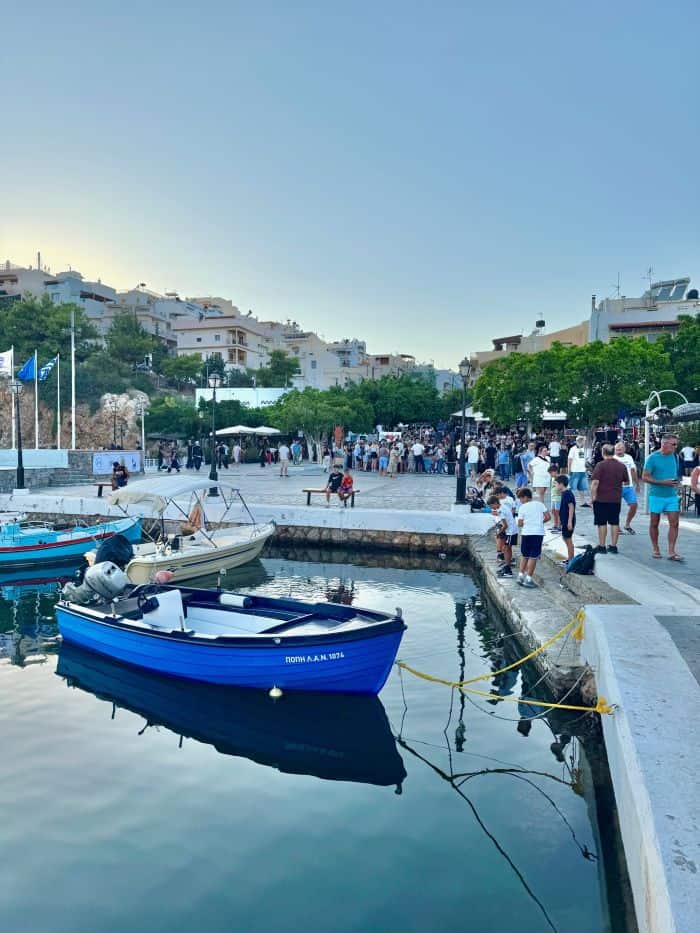
From the lake, it’s an easy stroll to the harbour and marina. Fishing boats and small yachts line the waterfront, and you’ll find several relaxed bars and seafood restaurants. It’s also where many of the daily cruise boats depart for Spinalonga Island or nearby coves.
Relax on the Beaches
There are several good beaches within walking distance of the town centre:
Ammos Beach – a small, sandy beach close to the marina, ideal for a quick swim.
Kitroplatia Beach – located in the heart of town with tavernas nearby.
Almyros Beach – a larger beach about 15 minutes on foot from the centre, set beside a small river and surrounded by tamarisk trees.
For quieter options, drive east along the coast to Ammoudara or further south to Voulisma Beach near Istron, one of the most beautiful beaches in eastern Crete.
Take a Boat Trip to Spinalonga Island
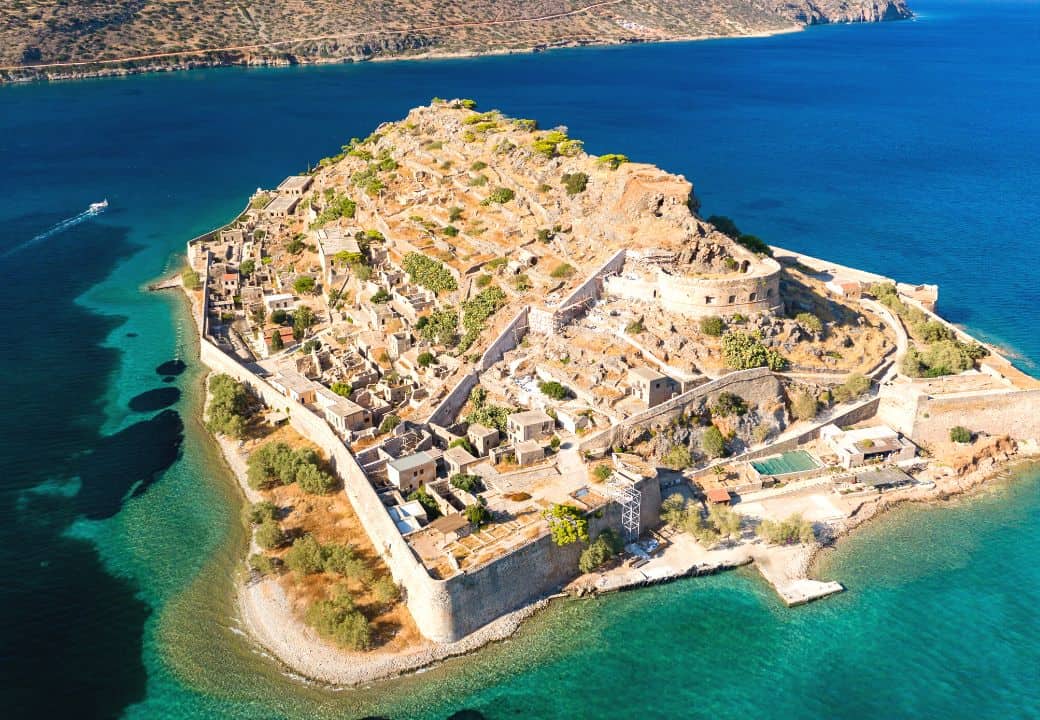
Spinalonga is one of Crete’s most famous landmarks, a former Venetian fortress that later became a leper colony. Boats depart regularly from nearby Elounda or Plaka, both about a 15–20 minute drive north of Agios Nikolaos.
A visit here offers insight into Crete’s layered history as well as striking views over Mirabello Bay. Allow half a day for the trip.
Several traditional villages surround Agios Nikolaos and make excellent short trips:
Kritsa – one of Crete’s oldest and most picturesque mountain villages, known for its narrow streets, local craft shops, and nearby Byzantine church of Panagia Kera.
Elounda – a seaside village north of town, home to some of Crete’s most luxurious resorts.
Plaka – just past Elounda, this small, charming village is the closest to Spinalonga
Sissi – a small harbour village to the west, perfect for a quiet lunch by the sea.
Archaeological Museum of Agios Nikolaos
This small but well-curated museum holds artefacts from eastern Crete, including items from Minoan and early Greek settlements. It’s an ideal stop for history enthusiasts, especially before or after visiting sites like Lato, an ancient Dorian city located a short drive inland.
Paralia Kitroplatia
Day Trips from Agios Nikolaos
Agios Nikolaos is perfectly located for exploring the eastern part of Crete:
Elounda and Plaka – for coastal scenery and easy access to Spinalonga.
Lasithi Plateau – a fertile plain dotted with windmills and small villages.
Vai Beach – the famous palm forest beach near Sitia, about two hours east.
Voulisma Beach – Macrame Beach Club
Knossos and Heraklion – if you haven’t already explored Crete’s capital and Minoan palace.
Hike the Richtis Gorge – About 40 minutes east of town lies Richtis Gorge, one of Crete’s most scenic walking trails.
Knossos Palace
Where to stay in Agios Nikolaos
There’s a wide range of accommodation from simple guesthouses to luxury resorts.
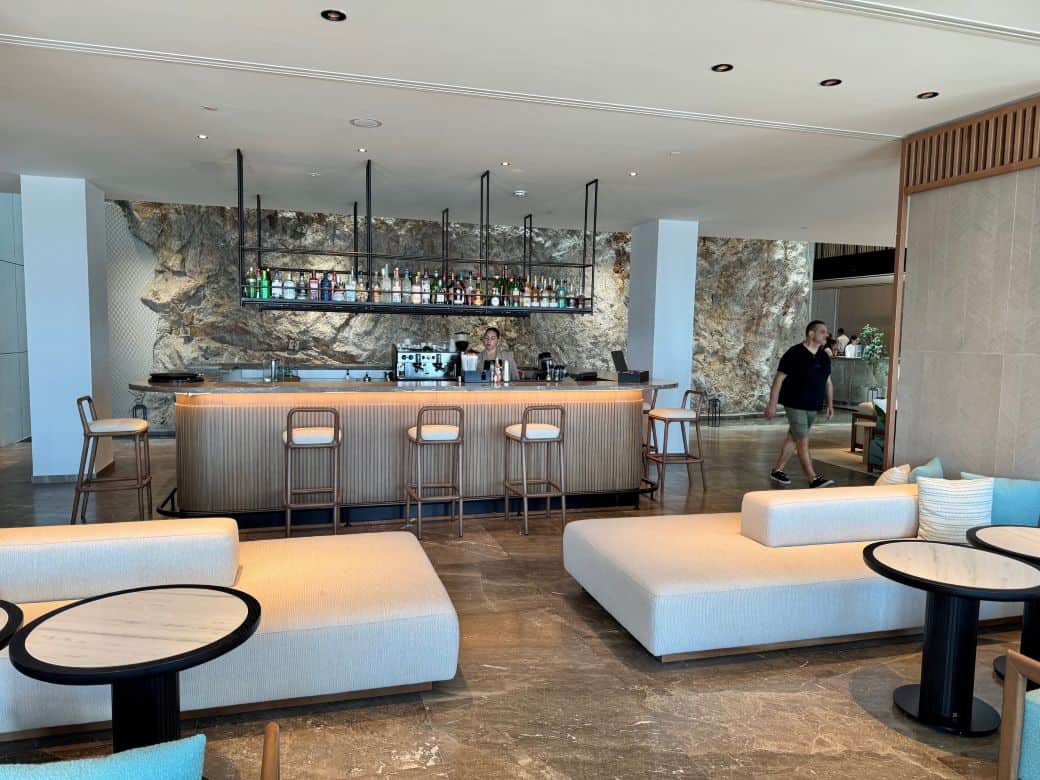
In town, options like Minos Palace Hotel & Suites, Minos Beach Art Hotel, and the newly renovated and branded Intercontinental offer modern comfort and beach access within walking distance of cafés and restaurants.
If you want to stay somewhere small and right in the heart of town, on the lake or harbour, then Lato Luxury Suites have affordable, self-contained rooms with great views, or Casa Porto Boutique Hotel is just along the harbourfront and has a great rooftop bar too.
A lot of people also like to stay up the road at Elounda which is renowned for its luxury hotels and excellent restaurants. Check out Elounda Beach Hotel, Elounda Gulf Villas, or Blue Palace Elounda, all within a short drive and ideal for combining relaxation with day trips into town.
Interncontinental Crete
Luxury Suites by Lato
Where to Eat and Drink
Agios Nikolaos has an excellent food scene with plenty of waterfront dining.
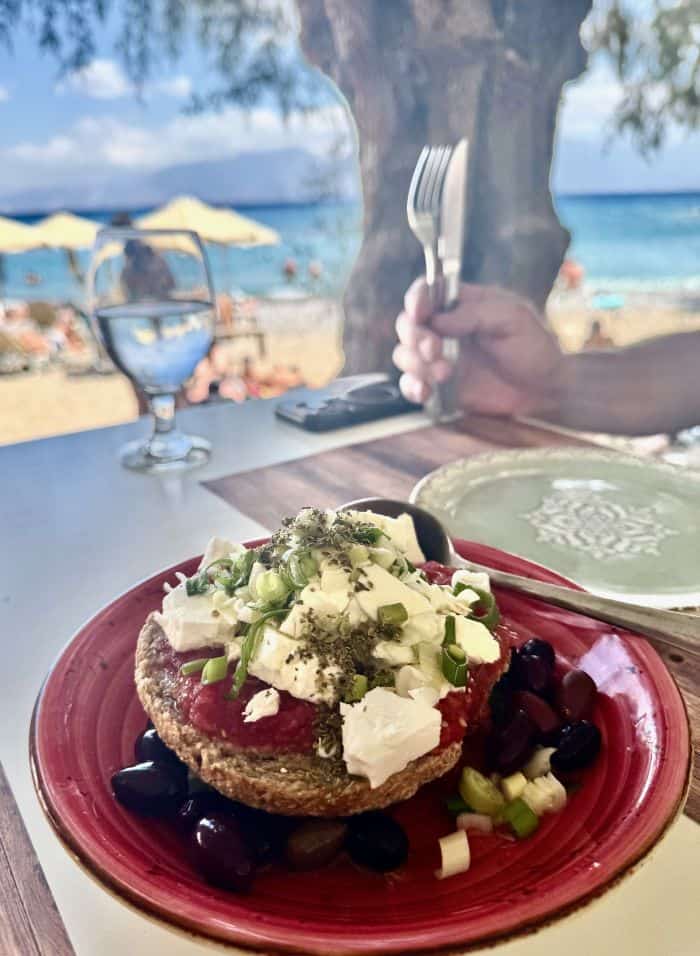
Overall, we find the quality here to be very high and cheaper than in Chania or even Rethymnon. Try local specialities such as dakos, stifado, grilled octopus, and the region’s own Cretan wine and raki.
Around the lake you’ll find tavernas serving fresh seafood and local Cretan dishes. A standout is Karnagio who also have a Gyros shop across the street.
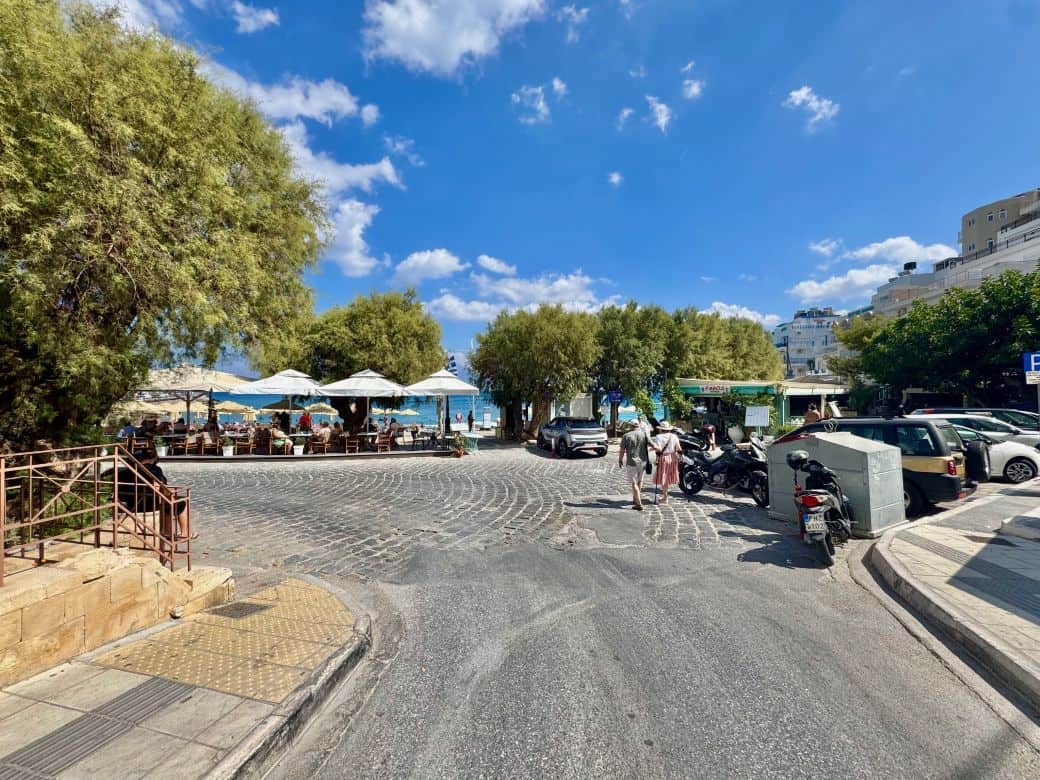
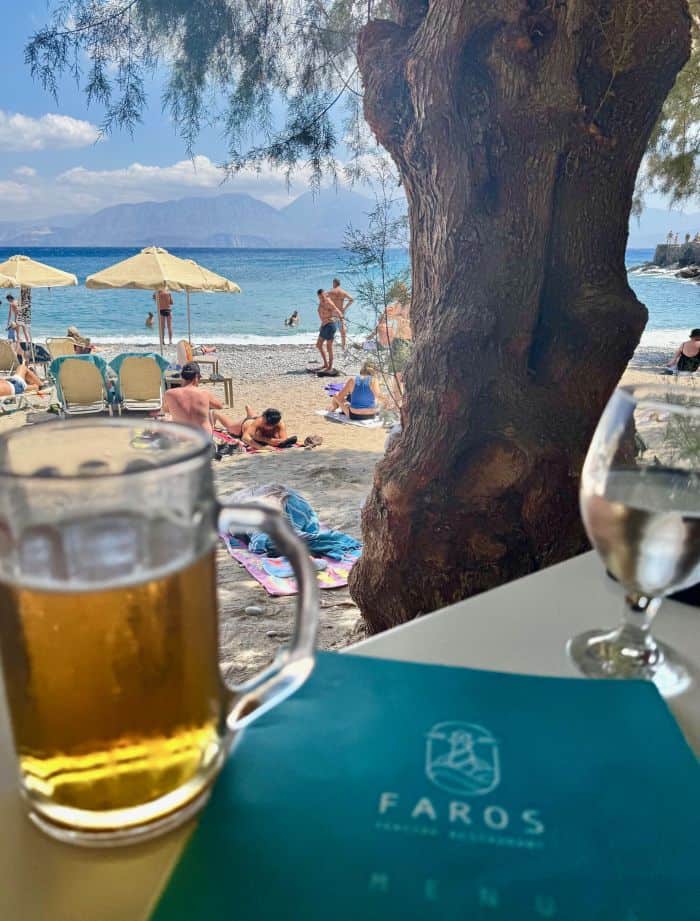
For a casual lunch, head to the marina or beachside cafés at Kitroplatia or Almyros. A lot of people love Mistral at Kitroplatia but we found Faros and Archontiko to be just as good and not as busy.
For dinner Almiriki at the end of Ammos Beach is excellent but you must book in advance in summer. There are several excellent gems in the back streets too such as Yiasemi and Se-Meli.
In nearby Elounda, several fine-dining restaurants feature creative Mediterranean menus with views across the bay. Despina’s is a favourite of many locals.
Yiasemi
How long to stay?
Like the other main cities of Crete – Chania, Rethymnon and Heraklion, Agios Nikaloas can easily use 3 days and really, given the number of days trips you can do if using it as a base, 5 would not be unreasonable.
Suggested itineraries for Rethymnon
3-Night Itinerary for Agios Nikolaos
Day 1
Morning: Explore Lake Voulismeni and the marina area.
Midday: Relax on Ammos or Kitroplatia Beach.
Afternoon: Visit the Archaeological Museum and nearby churches.
Evening: Dinner by the lake or along the harbourfront.
Day 2
Morning: Drive to Elounda or Plaka and take the boat to Spinalonga Island.
Afternoon: Lunch in Plaka, followed by a short swim or stroll through Elounda village.
Evening: Return to Agios Nikolaos for a relaxed drink by the water.
Day 3
Morning: Drive to Kritsa and visit the Panagia Kera church.
Midday: Continue to the Lasithi Plateau or hike the Richtis Gorge if you prefer nature.
Afternoon: Stop at Voulisma Beach for a swim on your way back.
Evening: Dinner in town, watching the sunset over Mirabello Bay.
Fodele is a beautiful village tucked into the northern coast of Crete, that is where the famous artist El Greco was from.
It’s surrounded by green hills, orange groves, and olive trees, sitting peacefully in a fertile valley that feels a world away from the bustle of the highway above. Only minutes off the main highway yet overlooked by most, this is a detour worth making a little time for.
And join our private Facebook Group where you can ask questions and get advice from real travellers, or book a 1:1 Consultation with Sandy – our Founder and highly aclaimed Greece expert.
Note: This article may contain affiliate links.
Where is Fodele?
Fodele is located about half an hour west of Heraklion and roughly an hour east of Rethymno.
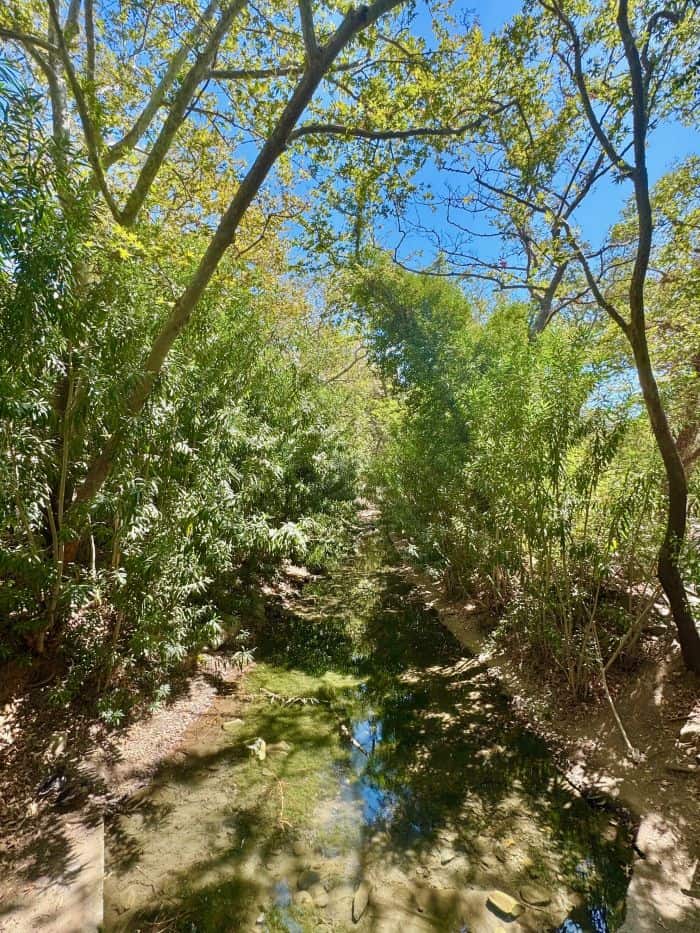
The village itself sits slightly inland, around 50 to 60 metres above sea level, where a small stream winds its way through shady plane trees and stone houses.
It is well signed from the main highway and easy to find with the turn off opposite Paralia Fodele beach, into the lush valley – it’s a lovely part of the island, and often overlooked.
What is it famous for?
Fodele has a reputation that far outweighs its size, and its all about its most famous resident – actually one of the most famous to come out of Greece!
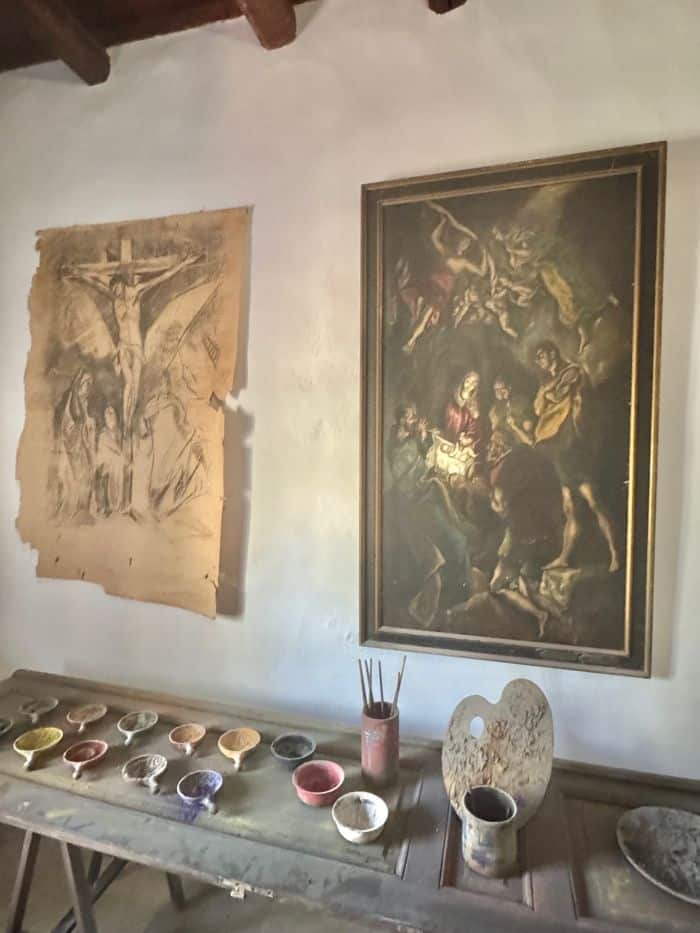
The village was the birthplace of Domenikos Theotokopoulos, better known as El Greco — the Cretan-born painter who became one of the greatest figures of the Spanish Renaissance.
You can visit a small museum housed in what’s believed to be his family home, where you’ll find reproductions of his most famous works and a good sense of his connection to Crete.
Aside from its artistic heritage, Fodele is also known for its citrus orchards. The fertile soil and fresh water from the nearby hills produce some of the juiciest oranges and mandarins on the island. When the trees are in bloom, the scent alone makes a visit worthwhile. The local economy still revolves around agriculture, and you’ll often see crates of oranges being sold at roadside stalls or in tavern courtyards.
The village is also known for its lush, shaded riverbanks, where the Pantomantris River runs beneath a canopy of tall plane trees — a rare sight on such a sun-baked island. Combined with its slow rhythm and friendly locals, Fodele feels like a pocket of old Crete that’s managed to stay authentic while welcoming visitors.
There’s also a touch of ancient history hidden in its soil. Archaeologists believe that nearby Fodele Bay may once have been the harbour of Astali, the port of the ancient city of Axos. You won’t find major ruins, but knowing this background adds another layer to the area’s long and fascinating story.
What is there to do in Fodele?
Fodele is small enough to explore on foot, yet rich enough to keep you busy for a day or two.
Start with the El Greco Museum, just outside the village centre. The building itself is charmingly simple, and while the artworks are reproductions, the exhibition gives real insight into El Greco’s life before he left Crete for Venice and then Spain. Art lovers will enjoy the connection to a world-famous painter in such a humble setting.
Byzantine Church of the Panagia, built between the 11th and 14th centuries over the remains of an early Christian basilica. Its stone walls and fading frescoes are a reminder of how long people have worshipped in this valley.
If you have a car, drive a little further into the hills to visit the Monastery of Agios Panteleimon, a 16th-century complex that once served as both a refuge and a fortress. The views from up there stretch across the valley to the sea.
Walking Trails – you can follow the river through the orange groves, stop for lunch beside the water, or take one of the marked paths that lead into the hills. In spring, the valley bursts with wildflowers, and in summer, the shade along the river makes it one of the coolest spots in Crete — literally and figuratively.
Hiking – look for the Fodele Gorge (Santorinios Gorge), a rugged route lined with rocks, fig trees and, after heavy rain, a few small waterfalls. It’s not a touristy path, so wear good shoes and bring water, but it’s a rewarding adventure.
Paralia Fodele – this is the beach on the coast. It is long and mostly sandy, with a few pebbly sections. One end is organised with sunbeds and umbrellas and a couple of (very good) tavernas, while the other stays more natural and relaxed. The water here is clean and usually calm, perfect for swimming, kayaking, or just lazing the day away.
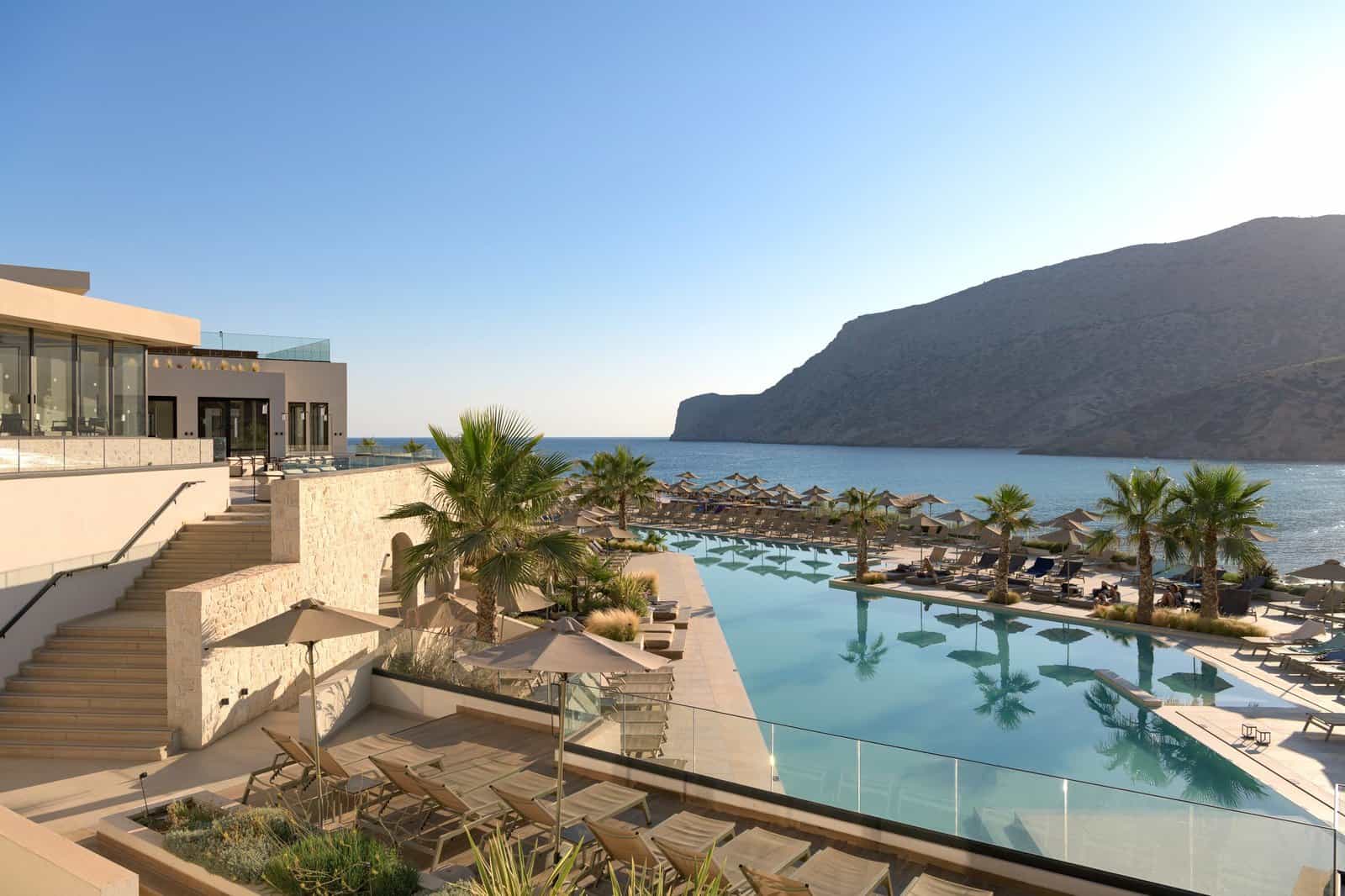
Fodele Beach & Water Park Holiday Resort – located right on Paralia Fodele this is a sprawling all-inclusive property that’s popular with families. It has everything from pools and water slides to spa facilities, several restaurants, and easy beachfront access. This is one of the better AI options in Crete as it isnt sharing the bay or the beach with many other big resorts and masses of people.
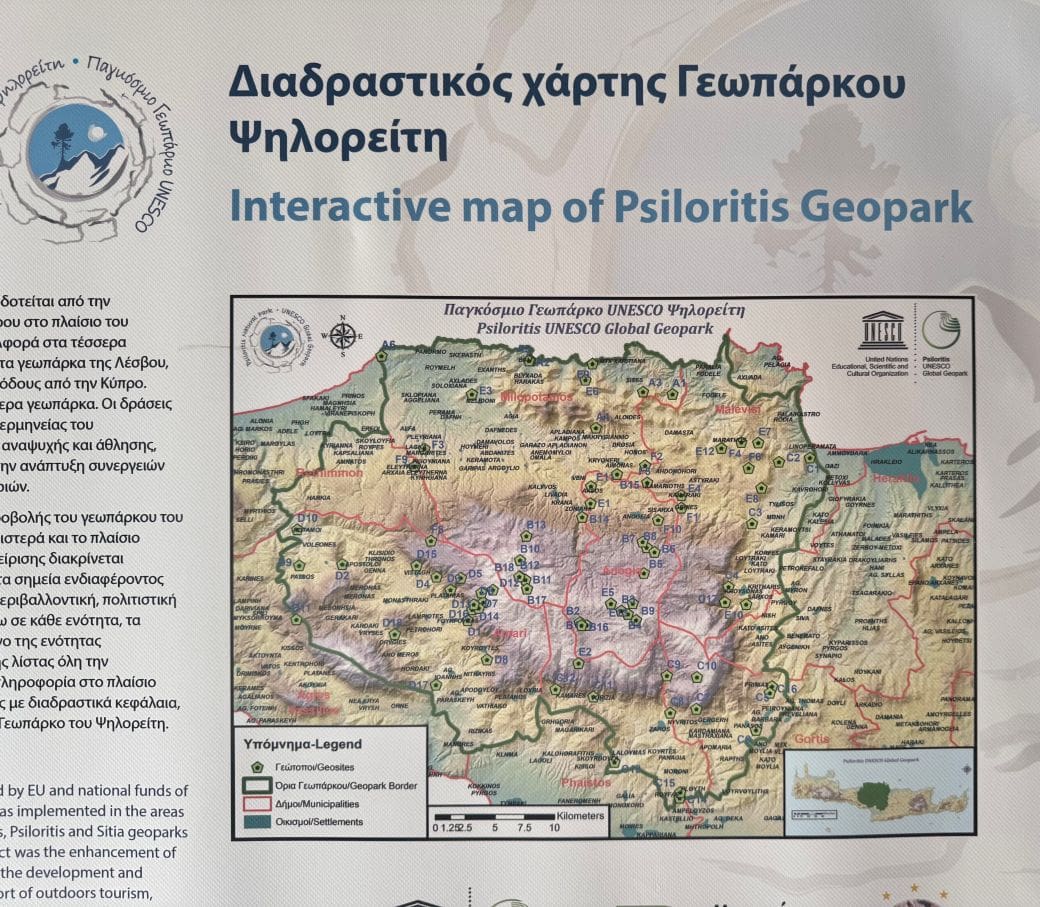
Psiloritis UNESCO Global Geopark – stretches across much of central Crete. This vast protected area covers ancient rock formations, gorges, caves and fossil sites that tell the story of how Crete rose from the sea millions of years ago.
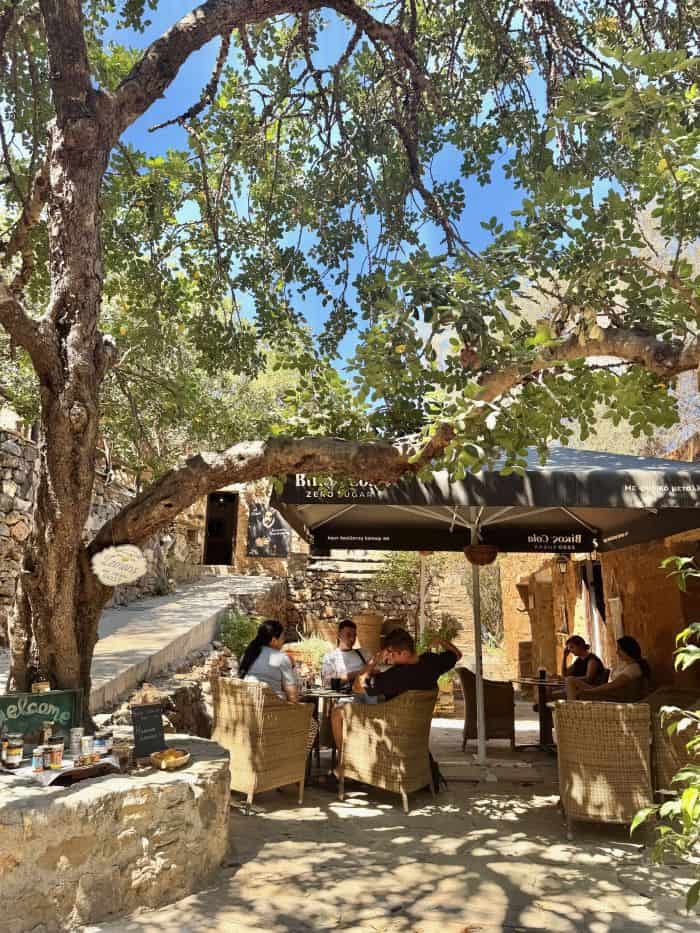
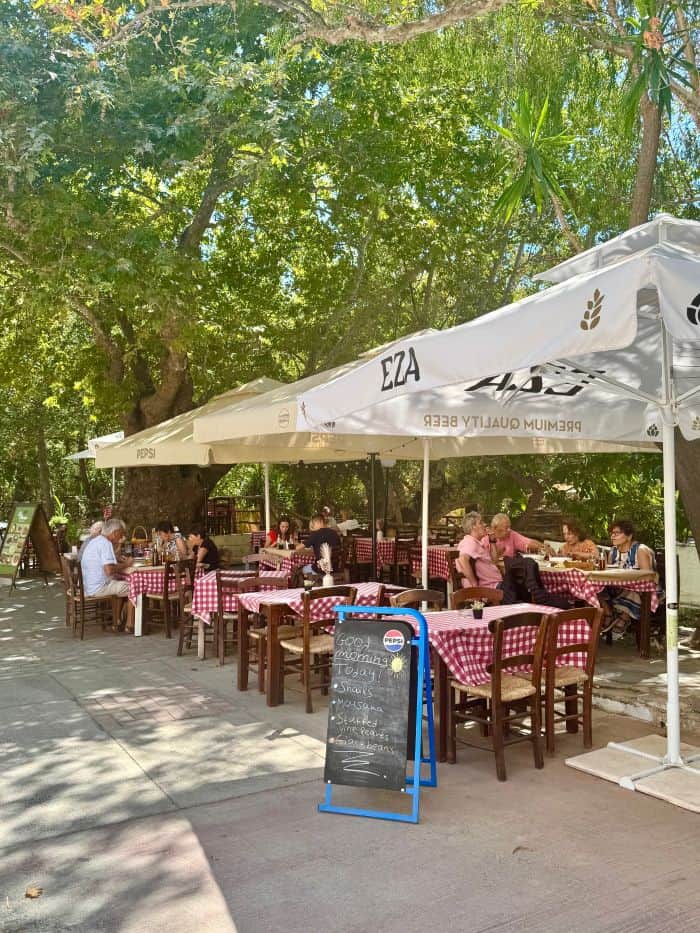
Fodele Village – there are several tavernas that serve excellent Cretan food, often under the shade of the plane trees or beside the lush creek, full of frogs, ducks and Geese. Look for dishes like slow-cooked lamb, fresh salads with local olive oil, and desserts made with orange syrup or honey. Pair it with a glass of raki or local wine and you’ve got a meal worth lingering over.
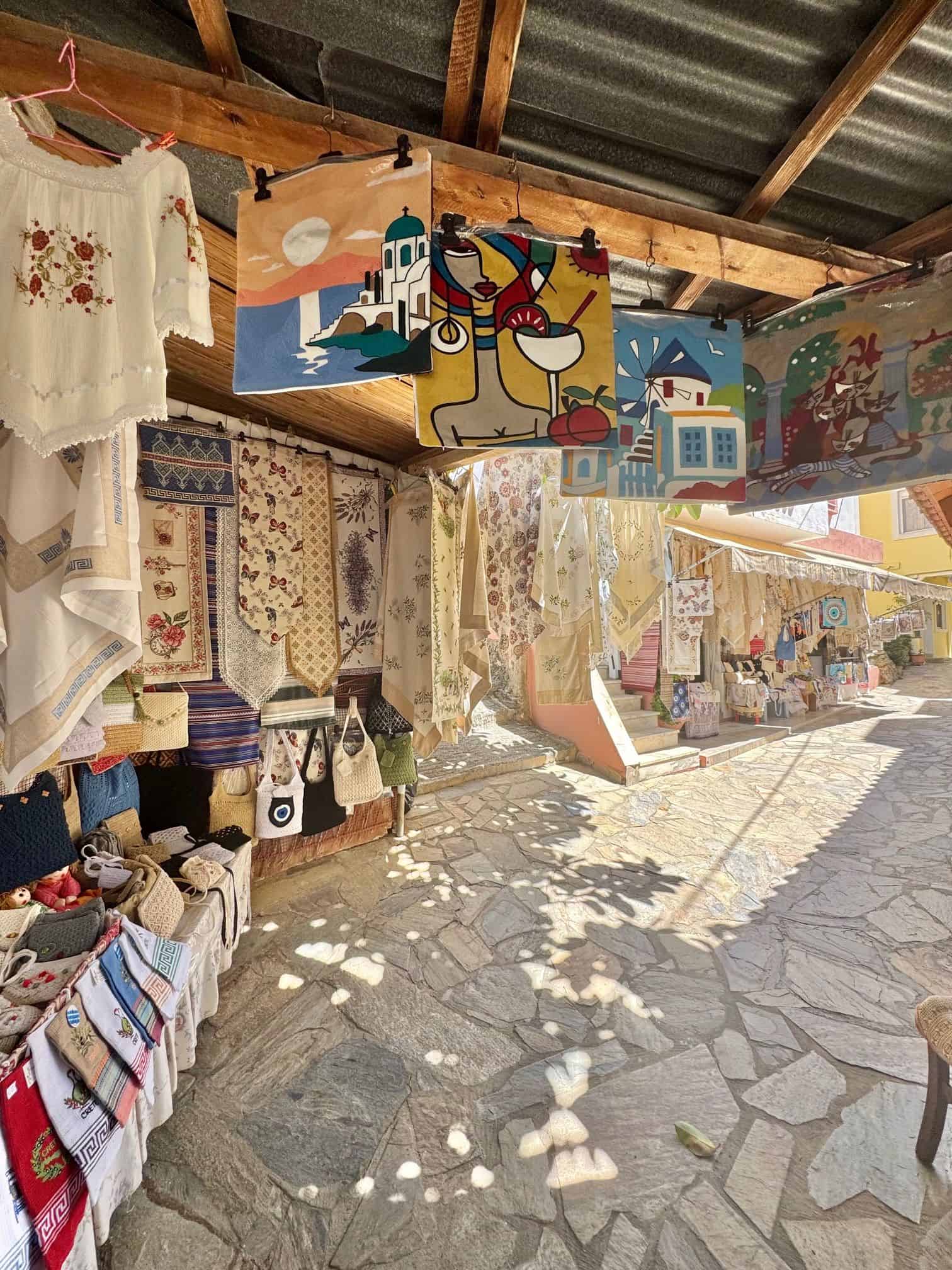
Souvenir Street – a handful of small craft and souvenir shops selling handmade pottery, woven textiles, and natural products like orange-blossom soap and olive oil. These are genuine local businesses, not the mass-produced kind you’ll find in resort towns. The lacework is exquisite.
The festival of Agios Panteleimon on the 27th of July. There’s live music, traditional dancing, and enough grilled meat and wine to feed half of Crete. It’s a great time to see how locals celebrate — with warmth, laughter, and a few late nights.
Where to stay in Fodele
There are no hotels in Fodele itself. It’s a sleepy village that probably wouldn’t see any tourists at all if it weren’t for El Greco, and thankfully, it hasn’t yet justified the opening of tourist accommodation. There are a few traditional rooms and small villas scattered across the region, though.
You can stay at the aforementioned all-inclusive Fodele Beach & Water Park Resort, right on the beach —a great option if you have kids.
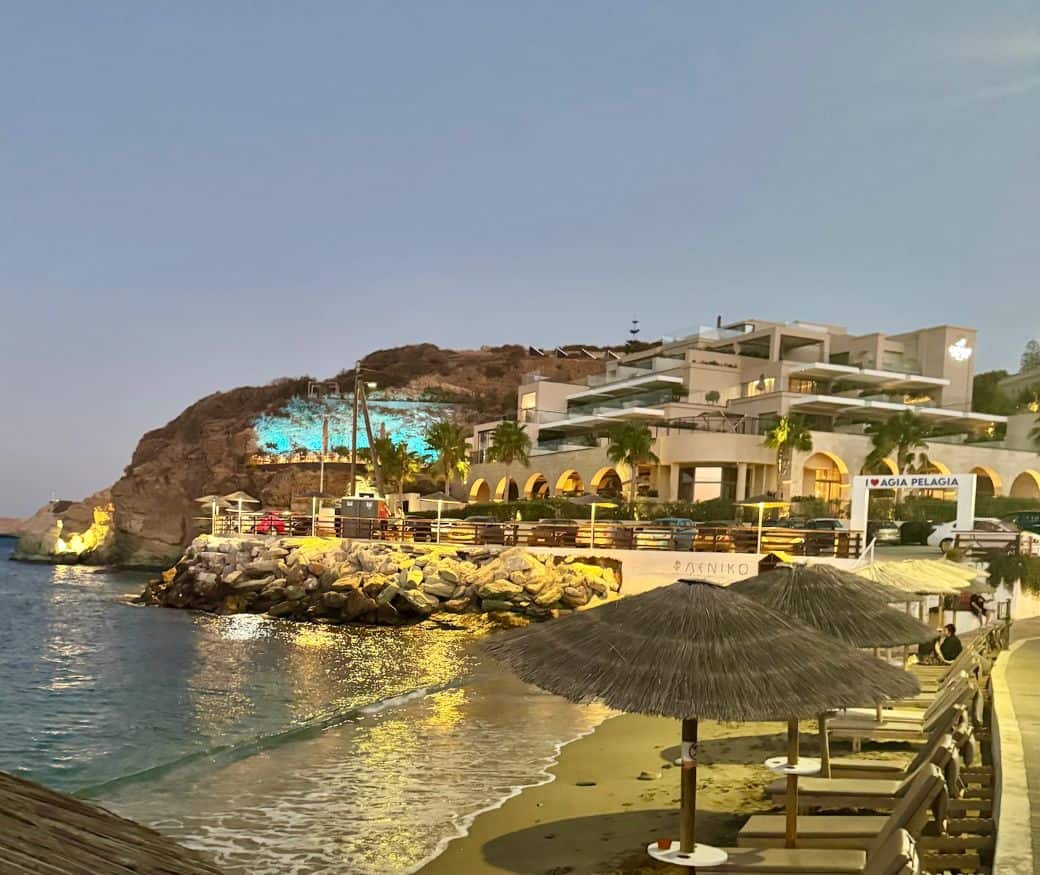
If you would prefer no kids at all, Castello Infinity Suites in nearby Agia Pelagia is a lovely option, and there are many beautiful beaches to explore on the 30-minute drive.
 Login
Login